

University of Nebraska: A Complete Guide to the State’s Premier Public University System
The University of Nebraska is more than just a single institution—it is a unified public university system composed of four distinct campuses, each with its own mission and strengths. Where to order a University of Nebraska diploma replacement, get a University of Nebraska degree online. Together, these campuses form a powerful network dedicated to education, research, and service across the state of Nebraska and beyond. With over 49,000 students enrolled in the Fall 2025 semester and a legacy spanning over 150 years, the University of Nebraska system represents “One University. Four Campuses. One Nebraska”.
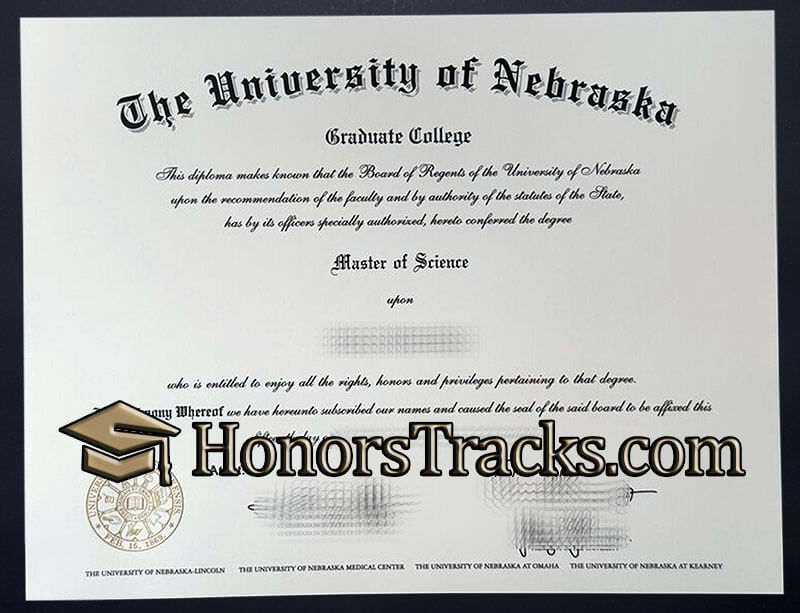
This comprehensive guide explores the University of Nebraska system, detailing each campus, its history, academic offerings, and what makes it a top choice for students. Realistic University of Nebraska diploma replica
The University of Nebraska System at a Glance
The University of Nebraska is the state’s only public university system, employing 16,000 faculty and staff across its four campuses. Each campus plays a unique role:
| Campus | Type | Notable Facts |
|---|---|---|
| University of Nebraska-Lincoln (UNL) | Flagship, Land-grant Research Institution | Big Ten member, R1 Carnegie classification, 23,992 students |
| University of Nebraska Medical Center (UNMC) | Academic Health Science Center | Nebraska’s only public medical school, 4,700 students |
| University of Nebraska at Omaha (UNO) | Metropolitan University | Serves Omaha, 15,000 students, #1 for military friendliness |
| University of Nebraska at Kearney (UNK) | Undergraduate-focused | Private-school feel, over 6,000 students |
A Rich History of Growth and Service
The history of the University of Nebraska begins in 1869, just two years after Nebraska achieved statehood. The university was chartered as a land-grant institution under the Morrill Act of 1862, with a mission “to afford the inhabitants of this state with the means of acquiring a thorough knowledge of the various branches of literature, science, and the arts”. It was founded in Lincoln and opened in 1871.
The system grew over time through the addition of key institutions:
-
1902: The Omaha Medical College (founded in 1881) joined the university, becoming the University of Nebraska Medical Center.
-
1968: The municipal University of Omaha (founded in 1908) became the University of Nebraska at Omaha.
-
1991: Kearney State College, originally founded as a normal school for teacher training in 1905, joined the system as the University of Nebraska at Kearney.
The Four Campuses of the University of Nebraska
University of Nebraska-Lincoln (UNL)
The flagship campus of the University of Nebraska System, UNL is a land-grant research institution and a proud member of the Big Ten Conference. It is classified within the Carnegie “R1: Doctoral Universities – Highest Research Activity” category, placing it in the top tier of U.S. research universities.
UNL was one of the first institutions west of the Mississippi River to award doctoral degrees and is known for major innovations, including establishing the world’s first undergraduate psychology laboratory and being the birthplace for the discipline of ecology. The university is home to over 23,000 students and offers a wide range of programs across nine colleges, including Agricultural Sciences and Natural Resources, Architecture, Arts and Sciences, Business, Education and Human Sciences, Engineering, Fine and Performing Arts, Journalism, and Law.
University of Nebraska Medical Center (UNMC)
Based in Omaha, UNMC is Nebraska’s only public academic health science center. It is a powerhouse of health education, research, and patient care, generating an annual economic impact of $7.7 billion for the state. UNMC serves over 4,700 students in about 100 programs and is responsible for educating approximately half of Nebraska’s physicians, dentists, pharmacists, and nurses.
Its reach is global, with notable contributions to combatting Ebola outbreaks and leading the nation during the COVID-19 pandemic. UNMC comprises six colleges, including Medicine, Dentistry, Nursing, Pharmacy, and Public Health.
University of Nebraska at Omaha (UNO)
UNO serves as the state’s metropolitan university, deeply connected to its namesake city. Founded in 1908 to make higher education accessible to Omaha’s residents, this mission remains central to UNO today. It is known for its student-centered environment, strong community engagement, and commitment to embracing students from all backgrounds.
UNO has been consistently ranked among the top public institutions in the nation for military friendliness, earning the #1 spot in 2024. It also stands out for its affordability, with one of the most competitively priced tuition rates in the region. The campus is home to about 15,000 students.
University of Nebraska at Kearney (UNK)
UNK is the system’s regional campus, with a strong focus on providing a premier undergraduate education. It offers students a “private school feel” on a major state university campus, where faculty and staff often know students by name.
UNK is an educational hub for Greater Nebraska, offering 121 undergraduate majors, 54 graduate programs, and a commitment to undergraduate research. Over 30% of its students participate in research outside the classroom. With its affordable tuition and dedicated faculty, UNK provides a high-quality, intimate learning environment for over 6,000 students.
Affordability and Value
The University of Nebraska remains true to its land-grant heritage by prioritizing affordable access to an excellent education. Tuition costs are at least 18% below the average of its peer institutions, with resident undergraduate tuition and fees for the 2024-25 academic year at just over $8,600. More than half of all undergraduates receive financial aid they do not have to pay back, and over 1 in 5 qualify for full tuition coverage through the Collegebound Nebraska program. UNL also offers a full-ride Regents Scholarship to top-performing in-state freshmen.
Conclusion
The University of Nebraska system offers a unique combination of educational opportunities across its four campuses. From the research-intensive flagship in Lincoln to the health science excellence in Omaha, the metropolitan engagement in Omaha, and the undergraduate-focused community in Kearney, there is a place for every student. With its affordable tuition, commitment to research, and a legacy of over 150 years of service, the University of Nebraska continues to transform lives and communities, living up to its mission of “One University. Four Campuses. One Nebraska.”