

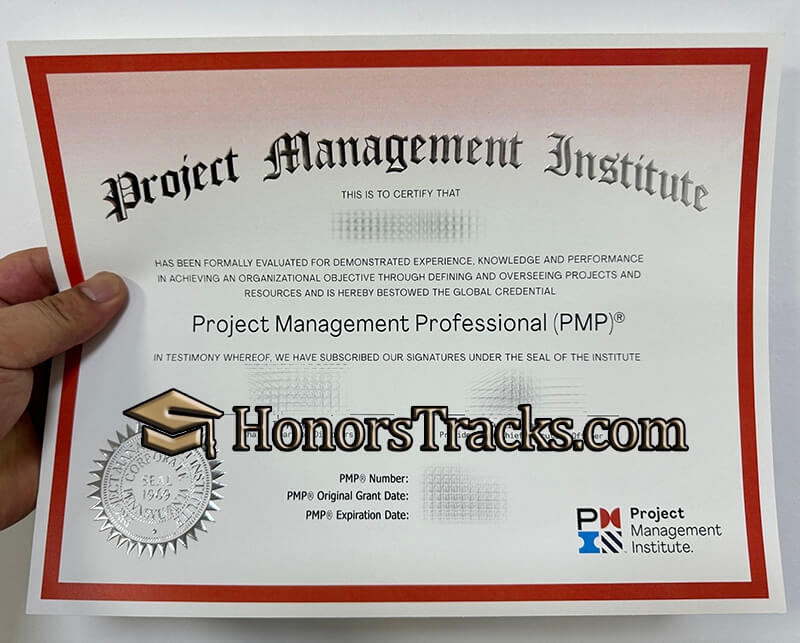
Project Management Professional (PMP)® Certification: Your Complete Guide to Earning the Gold Standard in Project Management
In today’s rapidly evolving business landscape, organizations worldwide are seeking skilled project leaders who can navigate complexity, drive results, and deliver value. Where to order a PMP certificate? Get a PMP certificate replacement. The Project Management Professional (PMP)® certification, offered by the Project Management Institute (PMI), stands as the most globally recognized and respected credential for project managers.
This comprehensive guide covers everything you need to know about the PMP certification—from eligibility requirements and exam changes to costs, study strategies, and the career benefits that await certified professionals.
What is the PMP Certification?
The Project Management Professional (PMP)® is a professional certification that validates an individual’s experience, education, and competency in leading and directing projects. Unlike entry-level credentials, the PMP demonstrates that you possess the skills to manage projects across industries, methodologies (predictive, agile, and hybrid), and organizational contexts.
It is widely regarded as the gold standard in project management certification, with employers across 21 countries recognizing its value through higher salaries and career advancement opportunities .
Why Earn Your PMP Certification? Key Benefits
1. Significant Salary Premium
The most compelling reason to pursue PMP certification is the financial return. According to PMI’s 14th Edition Earning Power Survey, PMP-certified professionals earn a median salary 17% higher than their non-certified counterparts across 21 countries .
In the United States specifically, the difference is even more dramatic:
-
PMP-certified median salary: $135,000
-
Non-certified median salary: $109,157
-
Premium: Nearly 24% higher
2. Long-Term Career Value
The benefits of certification compound over time. U.S. survey participants with more than ten years as a certified PMP reported a median salary of **$173,000**, compared to $123,000 for those certified less than five years. This demonstrates that the PMP delivers lasting value that far outweighs the upfront investment in exam preparation and fees.
3. Global Demand for Project Professionals
The project management profession is experiencing unprecedented growth. PMI’s Global Project Management Talent Gap report projects that up to 30 million more project professionals will be needed by 2035 to meet global demand. As AI, sustainability initiatives, and digital transformation reshape industries, skilled project leaders will be essential to turning uncertainty into opportunity.
4. Future-Proof Your Career Against AI Disruption
LinkedIn estimates that the skills needed in people’s jobs will change by as much as 70% in the next five years due to AI. The PMP certification evolves alongside these changes. The 2026 exam update introduces new content areas, including artificial intelligence (AI), sustainability, and stakeholder engagement—ensuring certified professionals stay ahead of the curve.
5. Enhanced Professional Credibility
Beyond salary, PMP certification signals to employers and peers that you possess:
-
Proven experience managing real-world projects
-
Mastery of project management principles and practices
-
Commitment to continuous learning and professional development
-
Ability to lead teams and deliver measurable results
PMP Eligibility Requirements: Do You Qualify?
To sit for the PMP exam, you must meet specific educational and professional experience requirements. PMI offers multiple pathways to accommodate different educational backgrounds.
Standard Eligibility Pathways
| Educational Background | Project Management Experience | Project Management Education |
|---|---|---|
| High School Diploma, Associate Degree, or Global Equivalent | 60 months (5 years) of non-overlapping project leadership experience within the past 8 years | 35 hours of project management education/training or CAPM® certification |
| Bachelor’s Degree or Higher (or Global Equivalent) | 36 months (3 years) of non-overlapping project leadership experience within the past 8 years | 35 hours of project management education/training or CAPM® certification |
| Bachelor’s Degree from PMI-GAC Accredited Program | 24 months (2 years) of non-overlapping project leadership experience within the past 8 years | 35 hours of project management education/training or CAPM® certification |
Sources:
Important Notes on Experience Requirements
-
Non-overlapping experience: The months of project management experience cannot overlap—meaning you need to demonstrate distinct periods of leading and directing projects.
-
Recent experience: As of July 2026, PMI will require that your professional experience be from within the past 10 years (previously 8 years) .
-
35 contact hours: This requirement is satisfied by completing training with a PMI Authorized Training Partner (ATP) or any PMI-registered provider .
PMP Exam Changes Coming in July 2026
PMI is launching a significantly updated PMP exam on July 9, 2026. If you are planning to take the exam, understanding these changes is critical for choosing the right study materials and timing.
What’s Changing?
1. Exam Content Domains (Major Shift)
The current exam emphasizes three domains with specific weightings:
-
People: 42%
-
Process: 50%
-
Business Environment: 8%
The new exam launching in July 2026 will rebalance these domains and introduce new focus areas :
| Domain | Current Weight | New Weight (July 2026) |
|---|---|---|
| People (Leading teams) | 42% | 33% |
| Process (Technical project management) | 50% | 41% |
| Business Environment (Strategic alignment) | 8% | 26% |
2. New Content Areas
The 2026 exam will include entirely new topics reflecting modern project management demands:
-
Artificial Intelligence (AI) in project management
-
Sustainability and environmental considerations
-
Enhanced focus on stakeholder engagement
-
Greater emphasis on value delivery over task completion
3. Updated Eligibility Requirements
PMI is introducing four educational background levels with corresponding experience requirements:
-
EQF Level 4 (MBO level-4 diploma): 60 months of experience
-
EQF Level 5 (Associate Degree): 48 months of experience
-
EQF Level 6 or higher (HBO bachelor or higher): 36 months of experience
-
PMI-GAC-accredited bachelor’s or postgraduate degree: 24 months of experience
4. Exam Format Changes
| Feature | Current Exam | New Exam (July 2026) |
|---|---|---|
| Total questions | 180 | 180 |
| Pretest (unscored) questions | 15 | 10 |
| Exam duration | 230 minutes | 240 minutes |
| Question types | Multiple choice, multiple response, matching, hotspot | Additional interactive types |
Sources:
What’s Staying the Same?
-
Renewal requirements: You must earn 60 PDUs every 3 years and pay a renewal fee (approximately $150 USD)
-
Exam fee structure: No changes announced
-
Passing score: Remains determined by psychometric analysis
Which Exam Should You Take?
-
If you are ready to test before July 2026: Study current materials (PMBOK® Guide 7th Edition, current Exam Content Outline)
-
If you are planning to test July 2026 or later: Use materials aligned with the new exam, including PMBOK® Guide 8th Edition (available late June 2026)